
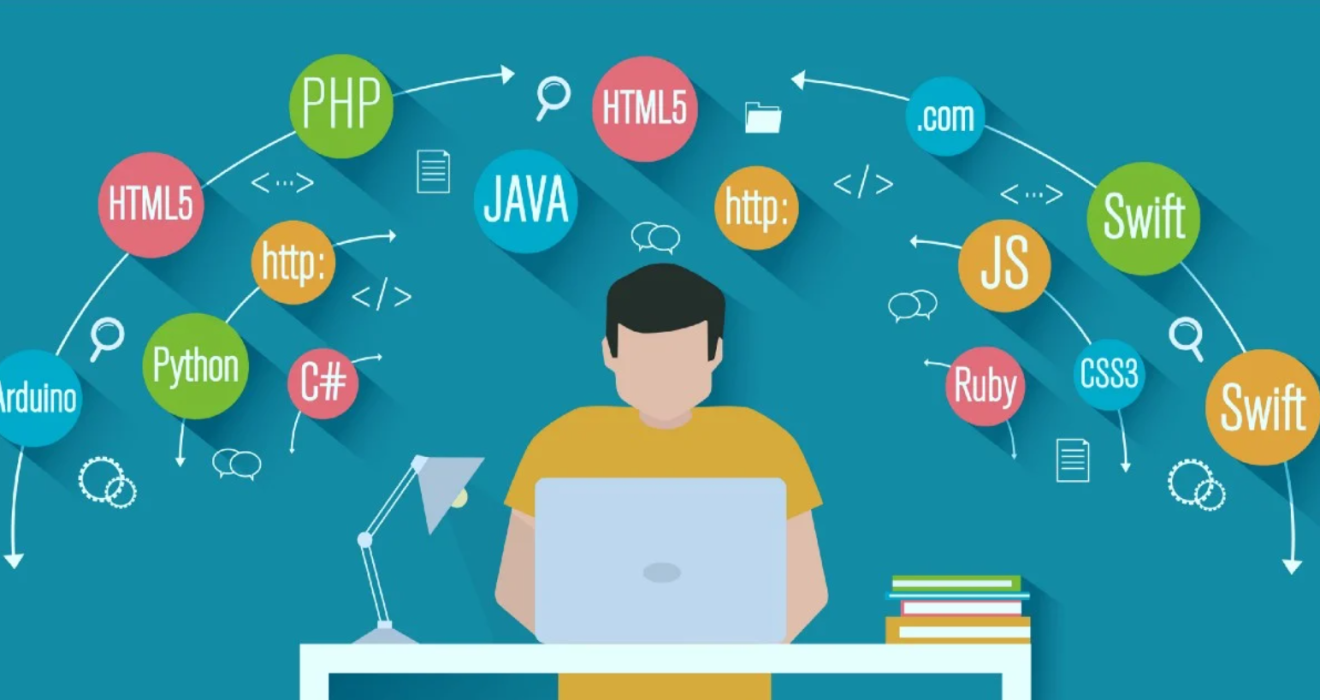
Exploring the Cutting-Edge: New Programming Languages and Trends of 2024
A programming language is a formal system of communication used to instruct computers to perform specific tasks. It consists of a set of rules and syntax that define how instructions are written and executed. Programming languages enable developers to write software, applications, and algorithms by translating human logic into machine-readable code. They vary in complexity and purpose, ranging from low-level languages like Assembly, which provide fine control over hardware, to high-level languages like Python and Java, which abstract many details to simplify development. Each language has its unique features and use cases; for example, C++ is often used for system software and game development due to its performance and control, while JavaScript is essential for web development. Ultimately, programming languages are tools that empower developers to solve problems, automate tasks, and create innovative solutions in the digital world.
Rust
Memory Safety: Rust provides memory safety without garbage collection, making it ideal for system-level programming.
Performance: It offers performance comparable to C and C++, but with safer concurrency and better tooling.
Julia
Scientific Computing: Julia is designed for high-performance numerical and scientific computing.
Ease of Use: It combines the ease of Python with the speed of C, making it popular in data science and machine learning.
Kotlin
Android Development: Kotlin has become the preferred language for Android development, offering better syntax and interoperability with Java.
Multi-Platform: Kotlin/Native and Kotlin Multiplatform enable developers to write code that can run on multiple platforms, including iOS.
Swift
iOS Development: Swift continues to be the primary language for iOS and macOS development, with ongoing improvements in performance and safety.
Server-Side Development: Swift is also gaining traction in server-side development with frameworks like Vapor.
TypeScript
JavaScript Superset: TypeScript extends JavaScript with static types, enhancing development for large-scale applications.
Growing Popularity: Its popularity continues to grow, especially for frontend and backend web development with frameworks like Angular and NestJS.
Go (Golang)
Concurrency: Go’s built-in support for concurrent programming makes it suitable for cloud services and microservices architecture.
Simplicity and Performance: It offers a simple syntax while providing efficient performance, making it popular for backend development.
Dart
Flutter: Dart is the language behind the Flutter framework, used for building cross-platform mobile, web, and desktop applications.
Productivity: It offers strong performance and a productive development experience with features like hot reload.
Scala 3
Functional Programming: Scala 3 enhances functional programming capabilities while simplifying the language syntax.
Interoperability: It remains interoperable with Java, making it a powerful language for JVM-based applications.
Elixir
Concurrency: Elixir is designed for building scalable and maintainable applications, particularly in concurrent and distributed systems.
Phoenix Framework: It is widely used with the Phoenix framework for web development, known for its high performance.
Zig
System Programming: Zig is a new language for system programming, focusing on safety, performance, and clarity.
Memory Management: It offers manual memory management with better safety compared to C and C++.
Nim
Performance and Productivity: Nim combines the speed and low-level access of C with the expressiveness and elegance of modern languages.
Metaprogramming: It supports powerful metaprogramming features, making it flexible for various domains.
F#
Functional-First: F# is a functional-first language on the .NET platform, suitable for data analysis, web programming, and more.
Interoperability: It interoperates seamlessly with other .NET languages, benefiting from the rich ecosystem.
Crystal
Ruby-like Syntax: Crystal offers a syntax similar to Ruby but with the performance of compiled languages like C.
Static Typing: It includes static type checking, providing safety and performance benefits.
Red
All-in-One Language: Red aims to be a full-stack language with capabilities for system programming, scripting, and GUIs.
Compact and Fast: It is designed to be compact and fast, with a small runtime footprint.
These languages are gaining attention for their unique features and the specific problems they address. Keeping an eye on these trends can help developers stay current and choose the best tools for their projects.
